
Stylin' Out: Introduction to Black Fashion & Dress History
LEARNING OBJECTIVES
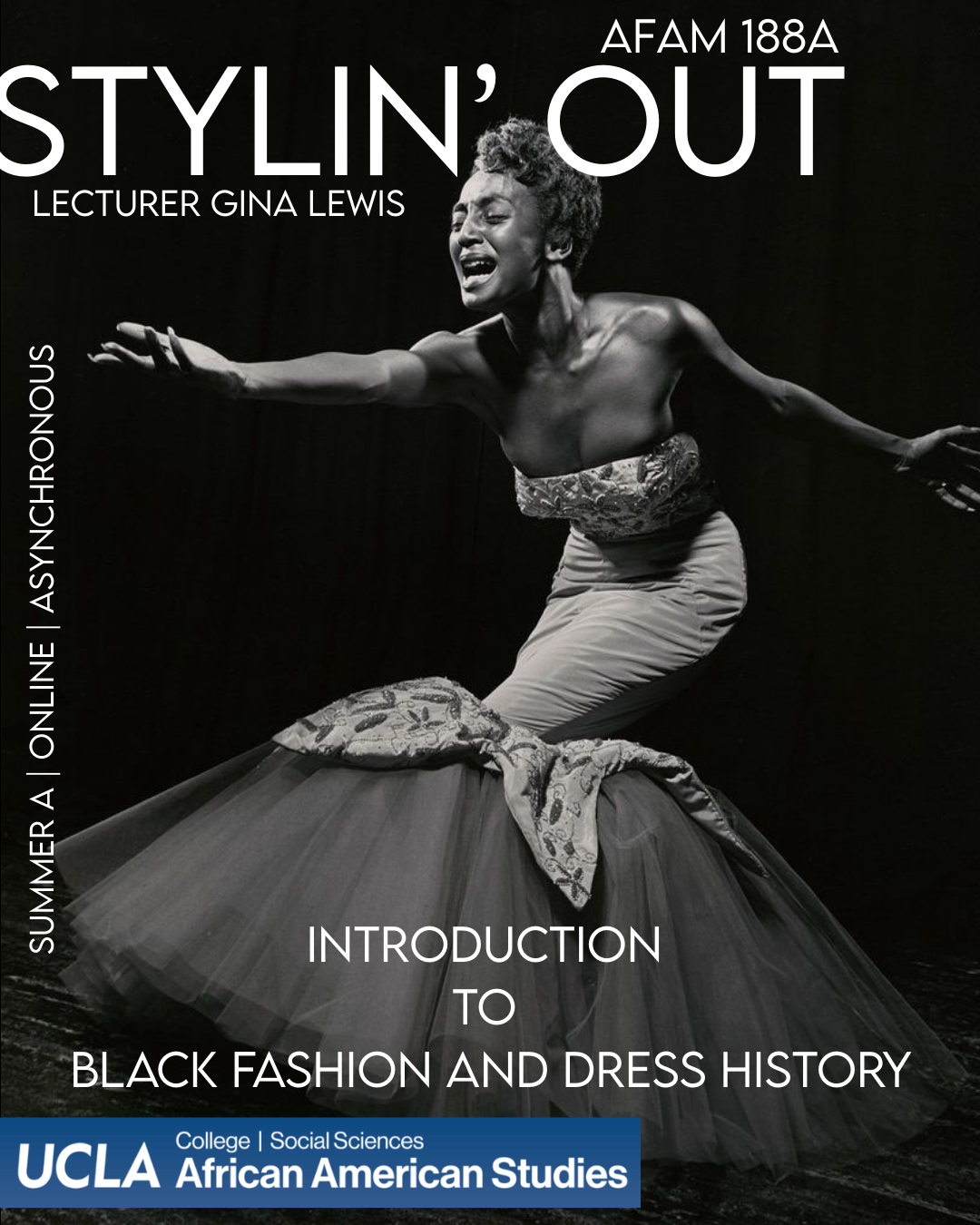
Black contribution to fashion systems holds strong significance, evolving from early dressmaking to present day design and global trends. This course will examine Black designers whose creative design practice are influenced by identity politics, racial histories and social movements. Black image and personhood can be traced alongside the political evolution of lawmaking and social constructs in a post-slavery America. With regard to Black identity and personhood, navigating one’s image and body has been considered synonymous with survival, spawning a navigation with dress as adaptation, rejection, pride, respectability, freedom and creative expression. Early dressmaking was a substantial role for women who used this skill to make a living for themselves, and passed these skills down generation to generation, also making clothing a site for tradition, community and expression within the Black community.
Global fashion, both brands and designers, have upheld Eurocentric legacy, often rendering Black contribution invisible, and perpetuating forms of racism and white supremacy through performative acts, exclusion, cultural appropriation and lack of credit to those contributors, and customers, who in part give global fashion houses their luster. Navigating racism, sexism and other intersectional challenges have created specific nuances within the role of dress in Black communities, and ideas of representation. This dynamic also creates an ecosystem of Black fashion creativity that must navigate against and around race dynamics that impact their contribution, point of view, and creative legacy.
This course will introduce key Black figures within different aspects of dress and fashion from early 20th century into the 21st century, demonstrating the economic impact, cultural and social influences relative to the times. It will aim to show different methodological approaches to fashion and dress scholarship, providing students with a framework to develop their own methods and approaches to fashion themes. Coursework opens students to various elements within fashion and dress scholarship and requires them to access a multitude of available resources (archives, magazine articles, trade publications, catalogs, blogs, film, documentary, marketing campaign material) that encompass Black fashion history, both traditional and non-traditional. Students should come away with a greater understanding and appreciation for the ways in which Black cultural influence has evolved within fashion systems (dress, design, brands, costume, journalism, etc.), what artistic and historical practices impacted their businesses, and why dress and image are intrinsically tied to the Black experience.
